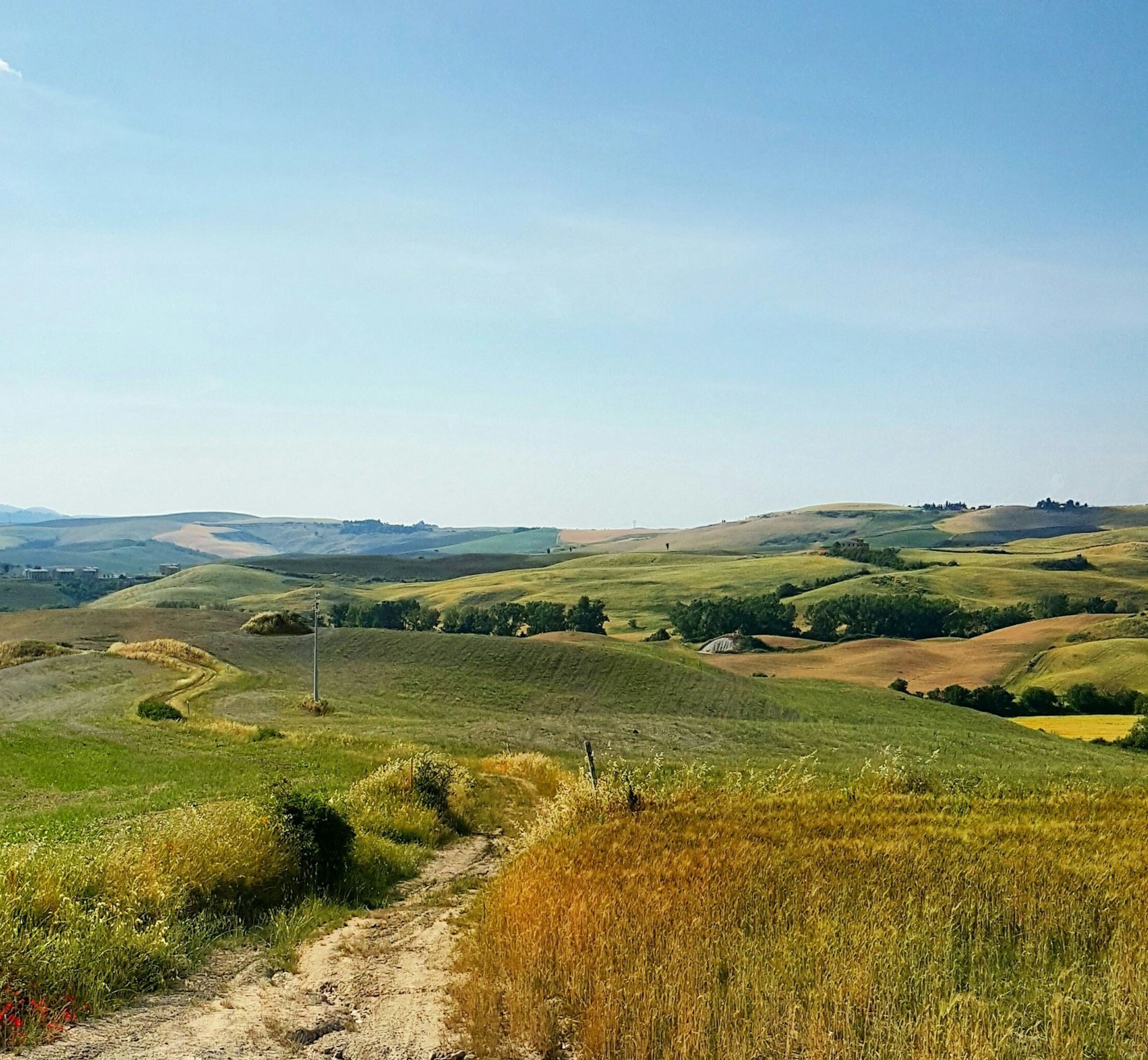
Masterclass in Zagori, Greece

This Masterclass on Rural Innovation is a unique opportunity to connect with practitioners, researchers, policymakers and the community of innovators working to shape the future of rural areas across Europe. Hosted by Ecomuseum Zagori in Zagori, Greece, in October 2026, this is one of only three RURACTIVE Masterclasses taking place across Europe, bringing together participants to explore innovative approaches to rural development through collaboration, knowledge exchange and practical learning.
Across two dynamic and interactive days in village of Ano Pedina at the heart of the Zagori region, participants will explore new approaches to enabling rural communities to develop innovative, place-based solutions to today's most pressing challenges. The Masterclass will place a special focus on the RURACTIVE rural development drivers Nature-based and Cultural Tourism and Culture and Cultural Innovation, showcasing how rural regions can harness their natural and cultural heritage to foster sustainable development, strengthen local identities and create new opportunities for communities and businesses.
Why you should attend this Masterclass:
Strong focus on innovation in practice. Rather than presenting innovation as a purely technical process, we will share how rural transformation can emerge through co-creation, collaboration, stakeholder engagement and empowerment, participatory governance, and locally grounded, place-based approaches.
First-hand insights into the RURACTIVE methodology on how to enable Multi-Actor Rural Innovation Ecosystems that empower rural communities to co-design and implement innovative solutions tailored to their specific territorial challenges and opportunities.
Strong emphasis on integrating RURACTIVE's cross-cutting priorities into rural innovation processes and solutions, including climate change adaptation and mitigation, biodiversity conservation and protection, and social justice and inclusion.
Participants will learn directly from the experiences of the 12 RURACTIVE Dynamos, pioneering rural territories across Europe that are actively testing and implementing innovative solutions in real-world settings. Through practical examples from the RURACTIVE Solutions Catalogue, the Masterclass will demonstrate how rural actors are using nature, culture and innovation to respond creatively and collaboratively to complex local challenges.
The Masterclass combines:
- Expert talks and inspiring case studies,
- Interactive discussions and reflection,
- Peer-to-peer learning and exchange,
- Networking opportunities,
- Dedicated space for participants to share their own experiences, initiatives and perspectives.
Whether you work in policy, research, regional development, sustainability, agri-food, energy, community engagement, or are at the beginning of your career in these domains, the Masterclass offers an opportunity to:
- learn from leading European rural innovation practices,
- exchange knowledge with international peers,
- discover innovative practical tools and approaches,
- and build new collaborations for more resilient, inclusive and climate-responsive rural futures.
Agenda
Day 1: Thursday 22nd October 2026
Meeting point:
Ano Pedina Conference Center, Ano Pedina, Zagori, Greece
| Timing | |
|---|---|
| 08.45 | Arrival, registration and coffee All participants are welcome to arrive at the Ano Pedina Conference Center in Central Zagori, from 8:45 till 9:00, grab a cup and coffee and settle in for a day of learning, sharing and networking. |
| 09.00 | Welcome by host and RURACTIVE EcoMuseum Zagori There will be a welcome by the host to all attendees, led by the RURACTIVE EcoMuseum Zagori team. Housekeeping notes by the host. |
| Peer to peer session and Masterclass trip | |
| 09.30–10.30 | Pathways of Art Solution Presentation The Pathways of Art is a place-based solution developed by the EcoMuseum Zagori that transforms traditional hiking trails into open-air cultural landmarks. Through an international Art Residency programme, artists worked with local communities to create site-specific artworks inspired by the history, traditions and natural environment of Zagori, transforming the abandoned trail into a living cultural experience. During the visit, participants will walk part of the trail, explore the artistic interventions and experience storytelling through QR-codes that record local oral histories, memories and traditions. The session will also present the collaborative process behind the residency, highlighting how artistic expression, community participation and digital interpretation can contribute to heritage preservation, strengthen local identity and create new opportunities for sustainable rural development. Demonstration of the EchoLoci App on a transhumance trail EchoLoci is an innovative project that uses sound, images and community participation to record and protect the biodiversity along Zagori’s traditional transhumance routes. By bringing together local pastoralists, scientists and citizens, the project highlights how mobile pastoralism, which is recognised by UNESCO as Intangible Cultural Heritage, helps maintain healthy ecosystems and rich cultural landscapes. Through EchoLoci, we explore how recording soundscapes and local stories can raise awareness, preserve collective memory, and inspire collaborative conservation of grasslands and wildlife. The demonstration shows how digital tools and community action can work together to protect nature and cultural heritage not just in Zagori, but in rural areas across Europe. |
| 10.30–11.00 | Transfer to Kipoi Village, Zagori |
| 11.00–11.30 | Listen, Touch, Feel: Interpretive guided tour and Soundwalk in Vikos Aoos Geopark Experience Listen-Touch-Feel, an inclusive educational activity developed by the EcoMuseum Zagori to make cultural heritage more accessible to people with visual disabilities. This innovative interpretive walk takes place at historic stone bridges in the Vikos-Aoos Geopark and the North Pindos National Park. Participants use 3D-printed models and recorded soundscapes to engage in tactile and auditory exploration, connecting with the cultural and natural heritage through senses beyond sight. This hands-on experience demonstrates how interpretive design and assistive technologies can promote inclusive tourism and expand access to heritage for all. The group will discuss how this approach can inspire similar solutions in other rural areas, combining nature-based tourism, cultural storytelling and social innovation. |
| 11.30–12.00 | Transfer back to Ano Pedina, Zagori |
| 12.00–12.30 | Discussion with the Pokari Project and the Women’s Agricultural Cooperative of Epirus Meeting Lena Gerothanasi, founder of the Pokari Project, and opportunity to discuss how traditional craftmanship and agrotourism can support sustainable rural livelihoods while preserving local intangible heritage. During the lunch, traditional homemade pie will be offered by the local Women’s Agricultural Cooperative of Epirus. This will provide the opportunity to participants to exchange experiences with community members and discuss the role of local associations in strengthening cultural identity and place-based development. |
| 12.30–14.00 | Lunch Lunch will be provided in the Ano Pedina Conference Center, by the Womens’ Agricultural Cooperative of Epirus. |
| 14.00 | Introduction to the RURACTIVE project, the Masterclass and its objectives Following, there will be an introduction to, and overview, of the RURACTIVE project by Dr Claudia De Luca from the University of Bologna and Dr Mariana Melnykovych from the Bern University of Applied Sciences. This will include the purpose of the project, how it has been implemented and what it has achieved so far. |
| 14.10 | Getting to know each other: Icebreaker activity Meet the other participants and speakers! This activity will be led by Dr Hannah Budge from the James Hutton Institute, where the purpose is to get to know why others have chosen to attend Masterclass event. We promise we won’t make you share the dreaded ‘fun fact’ with the group! |
| 14.30 | Learning session focused on the Rural Development Driver: Culture and cultural innovation Sabrina from the University of Pisa will describe how RURACTIVE has approached Culture and cultural innovation, why it is important and its contribution to the project. Examples of rural innovations from the RURACTIVE solutions catalogue, will then be shown, which tackle the challenges and utilises opportunities raised in the previous presentations. This will be followed by a presentation on the Ruritage EU project and how it interlinks with this RDD. This will be led by Dr Claudia De Luca from the University of Bologna. |
| 15.15 | Learning session focussed on Rural Development Driver: Nature-based and cultural tourism This session will form three parts. Firstly, Tyler Von Der Heyden from the University of Bologna will describe how RURACTIVE has approached nature-based and cultural tourism, why it is important and its contribution to the project. Examples of rural innovations from the RURACTIVE solutions catalogue will then be shown, which tackle the challenges and utilises opportunities raised in the previous presentations. This will be followed by a presentation by EcoMuseum Zagori on their work and how it fits within this RDD. There will then be an open discussion between speakers and participants on the challenges and solutions regarding innovations in nature-based and cultural tourism. All participants will have the opportunity to contribute to the discussion, and how the points raised fits within their own organisation, experiences and current work. |
| 16.00 | Comfort break and networking Refreshments will be provided for all participants and speakers. Relax and reflect on the morning’s session so far. |
| 16.15 | Interactive session: Multi-actor rural innovation ecosystem methodology Presentation, led by Benedetta Cavalieri of the Multi-actor rural innovation ecosystem methodology developed in RURACTIVE to facilitate innovations in rural areas across Europe and how this has been implemented. This will then lead onto a discussion of how such a methodology could be used in the participant’s field of work, and lessons which could be taken from the process. |
| 17.00 | Reflections on the day Dr Hannah Budge will ask participants to reflect on the information they have learned throughout the day and also provide details of the following day's activities. |
| 17.30 | Close of the day Dr Hannah Budge will provide closing comments and recap plan for Day 2. There will be free time until dinner. |
| 18.00 | Group networking dinner This will be at “Ta Soudena - Sotiria Tsigara”, Ano Pedina, Zagori. |
Day 2: Friday 23rd October 2026
Meeting point:
Ano Pedina Conference Center, Ano Pedina, Zagori, Greece
| Timing | |
|---|---|
| 09.15 | Meet at Ano Pedina All participants are welcome to arrive at the Ana Pendina Conference Centre from 9am till 9:15am, grab a cup of coffee and settle in for a day of learning, sharing and networking. |
| 09.30 | Introduction to Day 2 of the Masterclass The hosts will outline the structure of the morning session. |
| 09.45 | This session will shift the focus onto how biodiversity is used as a cross-cutting priority of rural innovation Francesco Vettore from University of Bologna will firstly introduce how biodiversity has been integrated throughout RURACTIVE and the approach which has been utilised throughout. RURACTIVE topic expert Dr Mariana Melnykovych from the Bern University of Applied Science will then present on how biodiversity is integrated in rural innovations, and why this is important. Examples from the RURACTIVE solutions catalogue and the RURACTIVE Dynamos will then be given, to highlight the range of innovations which already consider how their work impacts and the effect it has on local/national biodiversity. Everyone will then be invited to discuss how and whether their work considers biodiversity, and reflect whether this could be done in the future. |
| 10.30 | This session will shift the focus onto how climate change mitigation and adaptation is used as a cross-cutting priority of rural innovation Climate change mitigation in RURACTIVE approach introduced by Ozge Ogut from the University of Bologna. This includes how the various analyses from the project shows that CCP has not been integrated or interlinked with various RDDs as predicted. This will prompt discussion and an interactive session of how solutions in RURACTIVE, as well as participant’s own work, can integrate climate change mitigation in their work. |
| 11.15 | Comfort break and networking Refreshments will be provided for all participants and speakers. Relax and reflect on the afternoon session so far. |
| 11.30 | This session will shift the focus onto how social justice and inclusion is used as a cross-cutting priority of rural innovation, with a focus on women-led innovation. Dr Diana Valero will introduce how social justice and inclusion is understood and approached in RURACTIVE. This will be followed by a presentation on RURACTIVE Insights on Women-led innovation in Rural Areas booklet. Participants will be encouraged to share their reflections on how gender equality and equity is embedded in their own work. |
| 12.15 | Wrap up of the Masterclass, including reflections of the past two days. This will be facilitated by Dr Hannah Budge and provide an opportunity for participants to discuss on what they have learnt and seen over the duration of the Masterclass. |
| 12.30 | End of Masterclass |
Practical information
- Transport for the field visit will be provided by the organisers.
- Lunches, refreshments and the networking dinner will be provided by the organisation.
- Participants are advised to bring weather-appropriate outdoor clothing and suitable walking footwear for the field visit in the Ano Pedina-Elafotopos trail and Kipoi Village. As weather conditions in Greece can change rapidly, layered clothing and waterproof jackets are strongly recommended.
Acknowledgement
This Masterclass is a RURACTIVE activity cofunded by the European Union, UK Research and Innovation and the Swiss Confederation.
It is part of a series of three Masterclasses to be organised in Scotland, Greece and Switzerland.
Registration
Please register here until 12 October 2026!If you have any question about registering, please contact Hannah.Budge@hutton.ac.uk and ecomuseumzagori@gmail.com