RURACTIVE Masterclass Brings Rural Innovation to Life in Scotland
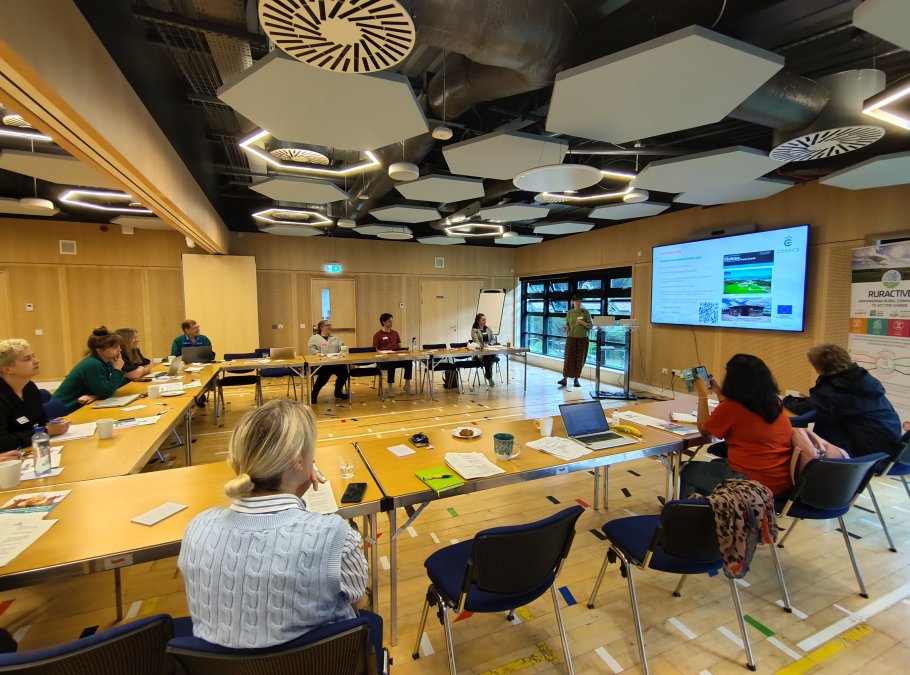
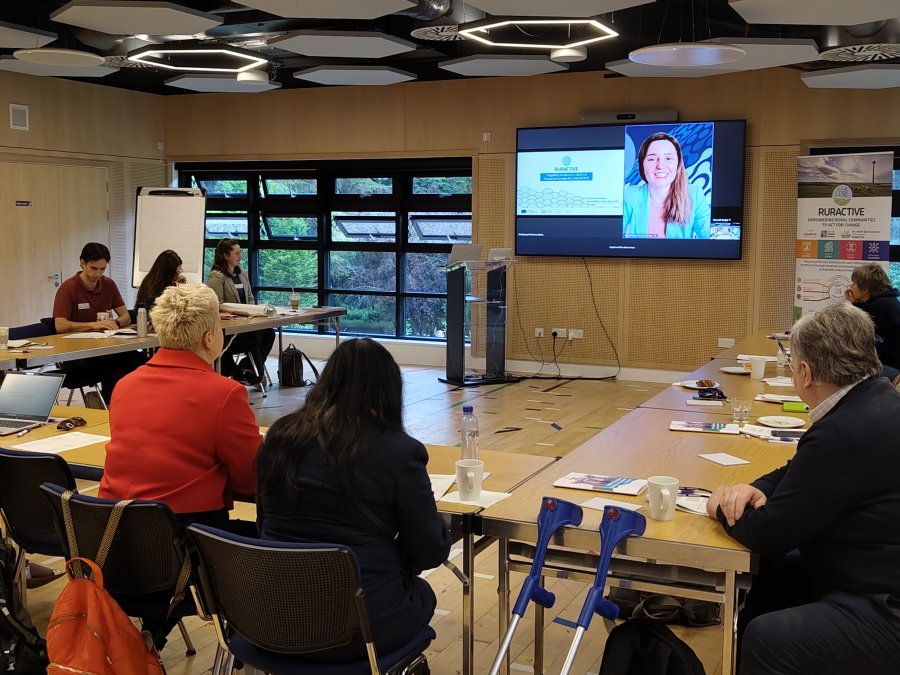
On 8–9 June 2026, the RURACTIVE Masterclass welcomed a diverse group of stakeholders to the James Hutton Institute's Craigiebuckler Campus in Aberdeen for two days of knowledge exchange, practical demonstrations and discussion on the future of rural development.
The event brought together participants working across two of RURACTIVE's Rural Development Drivers, Agri-food Systems and Ecosystem Management as well as Energy Transition and Climate Change Neutrality. Attendees included representatives from the Scottish Government, National Farmers Union Scotland, community organisations, the MacRobert Trust, university students and rural practitioners, all contributing their perspectives to lively discussions throughout the programme.
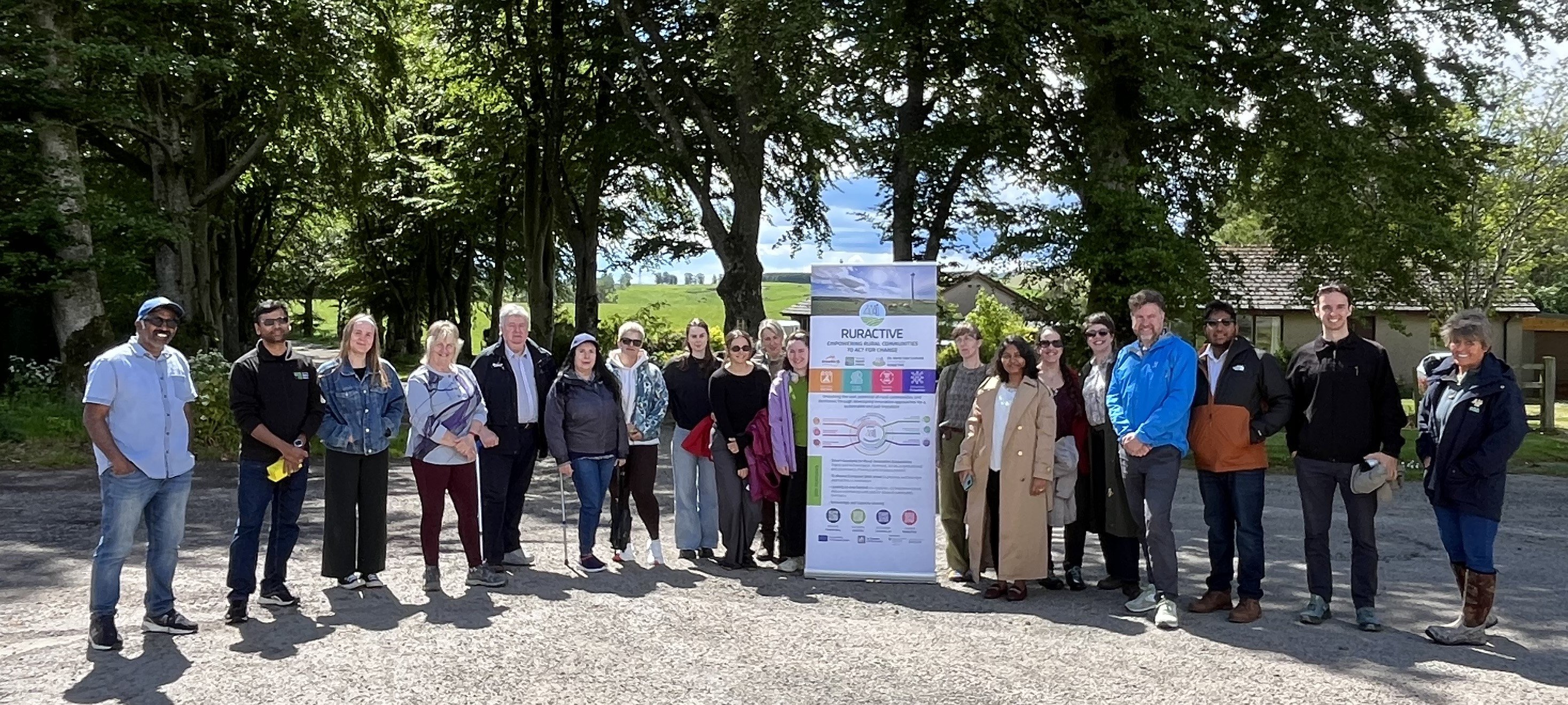
The first day introduced each thematic session within the context of the RURACTIVE project before showcasing examples from the RURACTIVE Solutions Catalogue from across Europe. These real-world initiatives demonstrated how innovative approaches are helping rural communities address shared challenges while strengthening sustainability, resilience and local development.
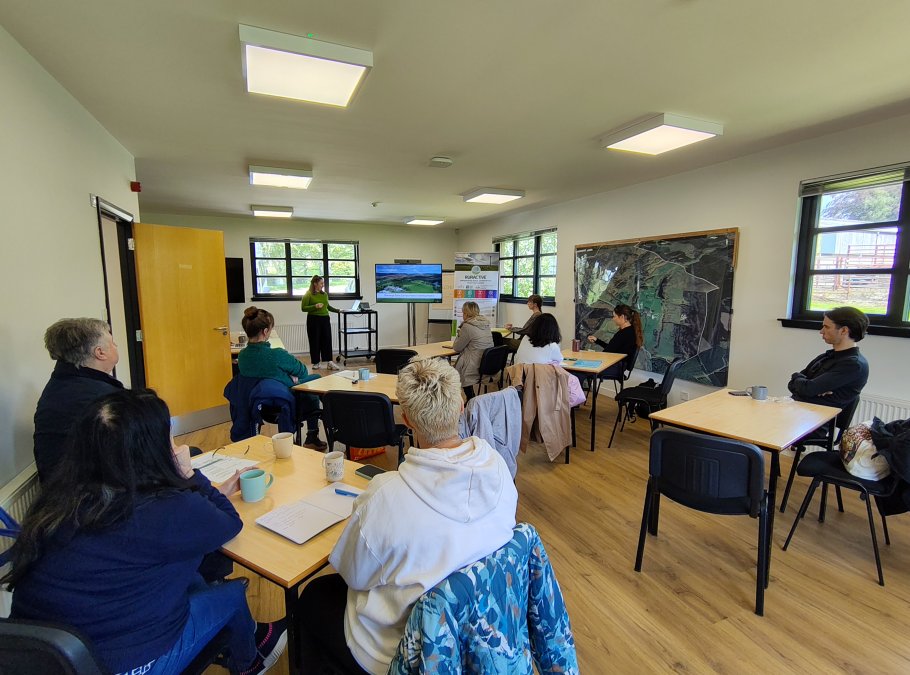
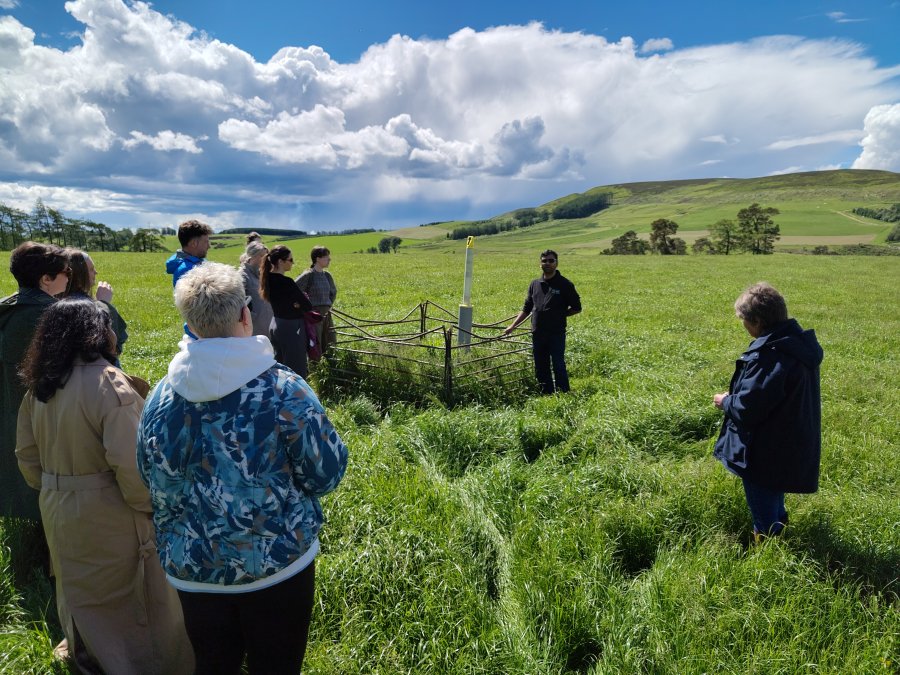
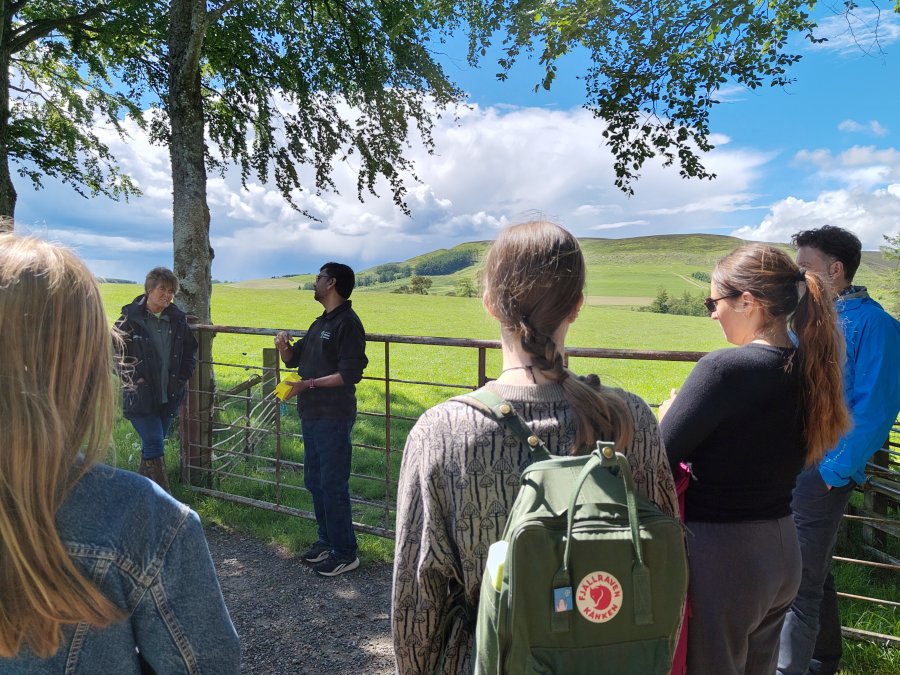
On the second day, participants travelled to Glensaugh Farm, where they were joined by the RURACTIVE Peer-to-Peer Group, facilitated by project partner GrowBiz. The visit provided first-hand insight into cutting-edge research and innovation in action. Participants toured the James Hutton Institute's research farm, learned about the HydroGlen green hydrogen initiative and explored some of the latest technologies for soil monitoring and environmental analysis.
Innovative solutions showcased
Throughout the Masterclass, participants were introduced to a range of inspiring projects and initiatives demonstrating how innovation is supporting rural communities across Scotland and Europe.
Glensaugh Farm is the James Hutton Institute's upland research farm and home to the Climate-Positive Farming Initiative, which develops and demonstrates practical approaches to achieving net-zero agriculture while enhancing biodiversity, improving soil health and strengthening rural resilience.
HydroGlen is a £6.2 million green hydrogen demonstrator project designed to help farms and rural communities become self-sufficient producers of renewable energy. The project aims to create a scalable model that can be replicated across rural Scotland and beyond.
The CODECS project, funded through Horizon Europe, explores how digital technologies can support sustainable agriculture by assessing their social, economic and environmental impacts. In Scotland, the project focuses particularly on enabling small farms and crofts to make effective use of digital tools.
GrowBiz supports micro-businesses, social enterprises and self-employed people across rural Scotland through free mentoring, networking, training and business advice, helping to strengthen local economies and foster rural entrepreneurship.
Participants also learned about MooFind, an innovative smart grazing system that combines GPS livestock tracking with satellite data to help farmers remotely monitor animal locations, health and pasture conditions, improving both farm efficiency and sustainable grazing practices.
Another featured innovation was CarbonXtras, which is developing a real-time monitoring, reporting and verification (MRV) system using soil sensors, mobile technologies and environmental modelling to measure soil health, carbon storage and greenhouse gas emissions. The project is helping establish scalable environmental sensor networks to support climate-smart agriculture.
Community-led rural development was also highlighted through the work of Marr Area Partnership, a charity supporting local organisations across Aberdeenshire through community planning, capacity building, funding support and sustainable development initiatives.
Finally, participants explored the successful collaboration between Huntly Development Trust and Vattenfall through the Clashindarroch Wind Farm Community Fund. The partnership demonstrates how renewable energy investments can strengthen long-term community resilience while generating wider economic and social benefits.
Collaboration, learning and inspiration
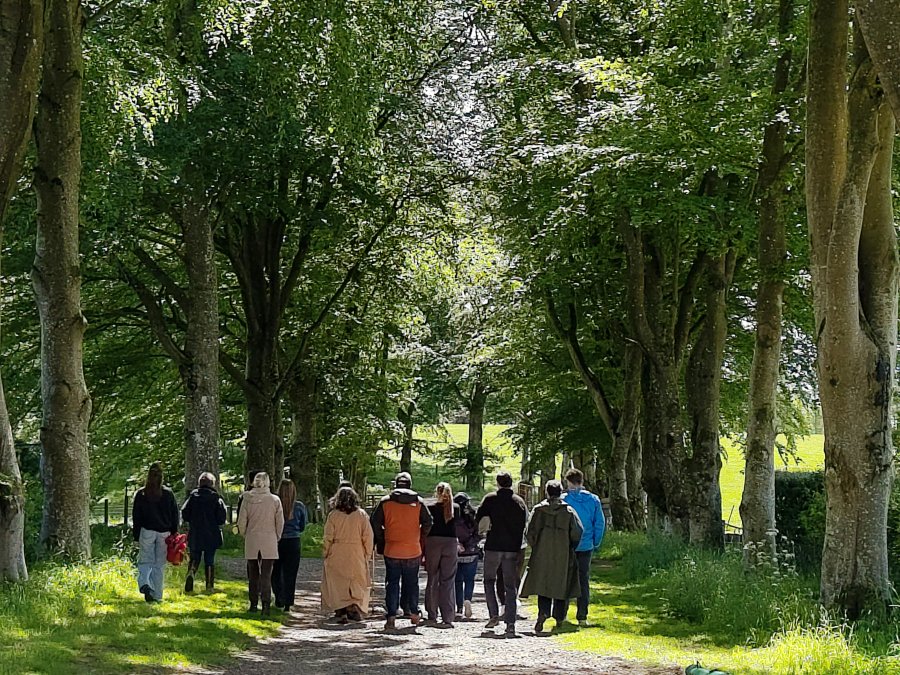
Beyond the presentations and site visits, the Masterclass created valuable opportunities for networking and collaboration among participants from a wide range of sectors and backgrounds. Bringing together policymakers, farmers, private landowners, researchers, community organisations and students encouraged rich discussions and a broad exchange of perspectives on the opportunities and challenges facing rural communities.
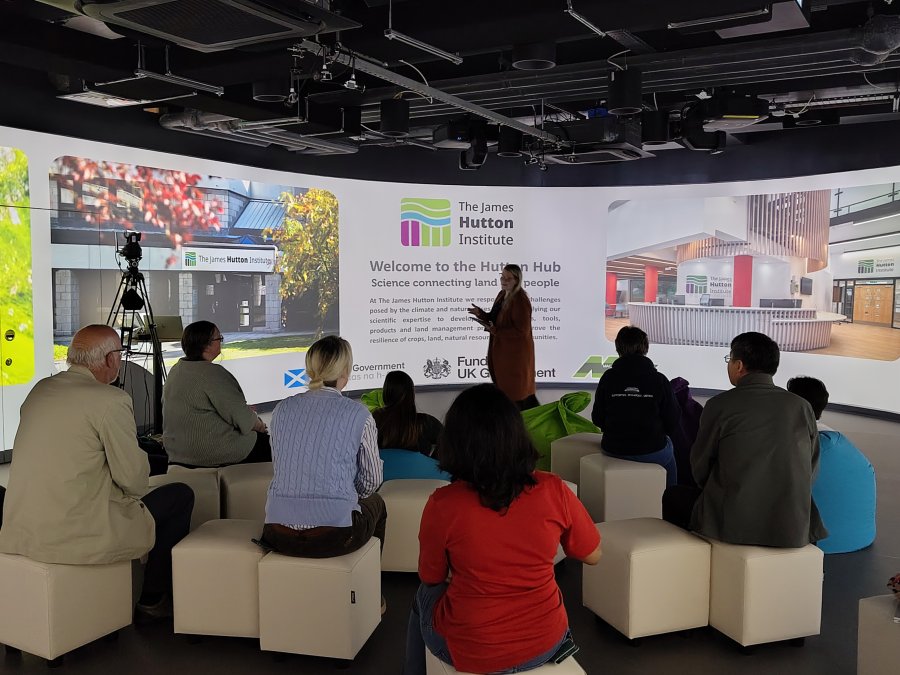
A particular highlight was a session in the James Hutton Institute's immersive suite, where Dr Mike Rivington presented historical UK weather data alongside future climate projections. The visualisation offered a compelling illustration of the impacts of climate change and sparked considerable interest among attendees, several of whom expressed enthusiasm about bringing additional groups to experience similar presentations.
The RURACTIVE Masterclass demonstrated the value of combining research, innovation and community engagement to accelerate rural transformation. By showcasing practical solutions and fostering meaningful dialogue between diverse stakeholders, the event strengthened connections across the rural innovation ecosystem and reinforced the collaborative spirit at the heart of the RURACTIVE project.
Two more Masterclasses are to follow suit in Greece and Switzerland respectively.